
New baby gifts: who are you really buying for?
9/14/2026
New baby gifts sorted by who they're for — the baby, mum after the birth, the whole family. What gets used in year one and what stays in the box.
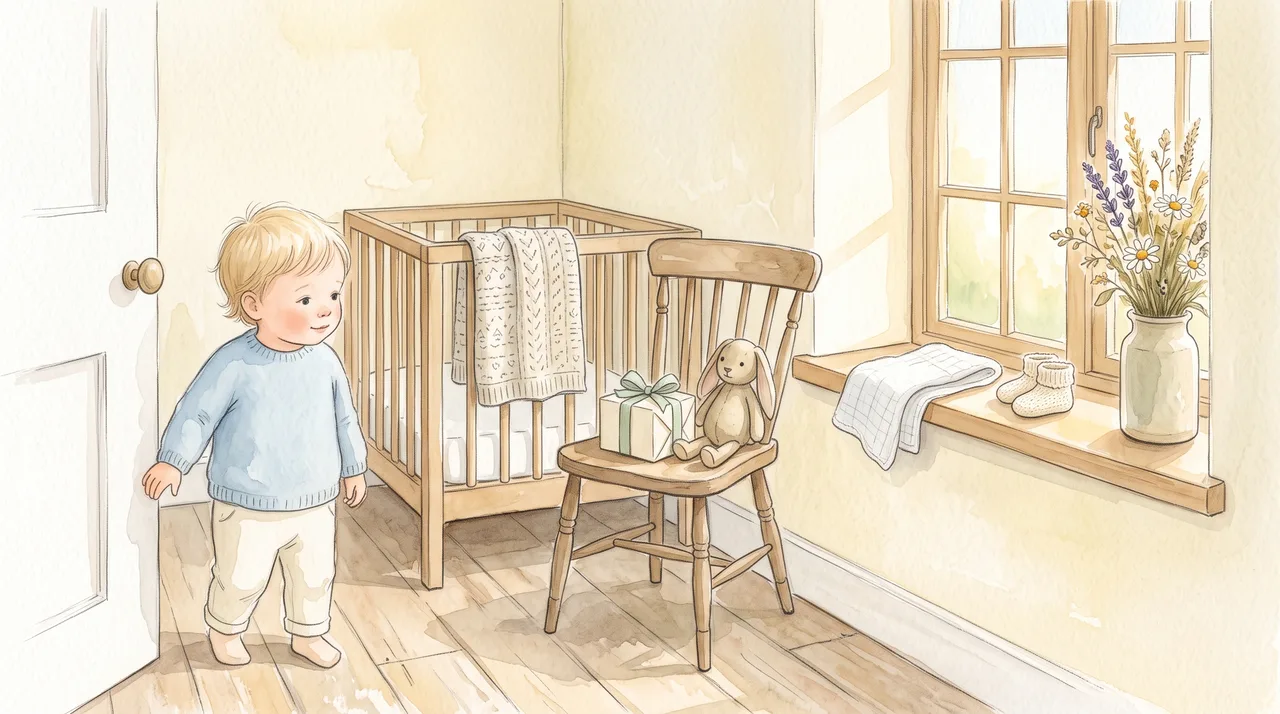
A gift for a new baby has three possible recipients, and each of them wants something completely different: the baby, the mum who has just given birth, and the family as a whole. A newborn appreciates nothing on its own — from the "baby" side, what actually gets used in the first year is mostly clothing two sizes ahead and kit for sleeping and carrying, because parents either already have everything else or get it three times over. The most welcome gifts therefore go to the mum (food, sleep, an hour off) and to the family (keepsakes that nobody can recreate once the first year has passed).
The whole guide is built around that trio: for each category you'll find what really gets used in the first year and what stays in its box.
New baby gifts by category
First, decide who the gift is really for
Most new baby gifts automatically target the baby, because the baby is the one who was born. Yet that's exactly the most crowded corner: the pram, cot, baby bath and car seat were sorted months in advance, and whatever is left arrives from several people at once. The most expensive present ends up unopened, while a box of home-cooked meals brings the most joy.
So split gifts by recipient and choose deliberately. For the baby, give things that get used up or grown into — not decorations. For mum after the birth, give time, food and relief; she's the one person in the room who regularly gets forgotten. For the whole family, give a keepsake that nobody will be able to make a year from now, because the baby will have a different little hand and a different face.
And one practical tip up front: ask the parents what they still don't have. It's not a failure of imagination — it saves them from two identical footmuffs.
For the baby: what actually gets used in year one
- Clothes in a six-month size, not newbornParents get newborn sleepsuits from everyone, and the baby outgrows them before they've even been washed. Buy sizes that will fit at around six months, and check which season that falls in — a winter snowsuit in a summer size is no use at all.
- A sleeping bag instead of a duvetPillows, duvets, cot bumpers, loose blankets and soft toys don't belong in the cot — the NHS lists them among the things that raise the risk of sudden infant death. A baby sleeping bag does the same job as a blanket and can't slip over the baby's face. Choose it by tog rating and room temperature; the recommended nursery temperature is roughly 16 to 20 °C.
- Muslin squares in what looks like too manyThey serve as a changing mat, a pram shade, a burp cloth and a light cover. They're always in the wash and parents never have enough — which makes them one of the few gifts that's fine even as a duplicate.
- Carrying and pram kit — but only after askingA wrap, a baby carrier, a footmuff or a pram rain cover get used every day, but they have to suit a specific pram and a specific mum — buy them only after checking. A carrier bought blind is the classic gift that ends up being resold.
- A toy for the hand, not the shelfIn the first months babies respond to contrast and sound, not detail: a cloth book, a rattle, a teether. Put toys labelled 3+ aside — what to avoid when buying for the youngest is a topic of its own, and the age label on the box isn't a suggestion but a safety warning.
For mum after the birth: a gift that eases the first weeks
- Food that can be eaten one-handedHome-cooked portions for the freezer, soup, chopped fruit, nuts by the bed. In the first weeks, meals are eaten standing up and one-handed, because the other hand is holding the baby. Arrange the drop-off in advance and don't stay — handing over the bag at the door is part of the gift.
- An hour someone else spends with the babyA babysitting voucher written on paper works better than "let me know if you need anything" — that offer never gets used. Name a specific time: I'll come on Thursday morning and you go and have a nap.
- Things that help with breastfeedingA nursing pillow, nipple cream, a big water bottle with a straw, nursing bras. The WHO recommends exclusive breastfeeding for the first six months, so for many mums feeding is daily work — and a gift that makes it easier hits exactly the right spot. Don't buy formula or bottles as a gift, though: that's the parents' decision, not the visitor's.
- Something that isn't "for the baby"A shower gel that doesn't smell like a pharmacy, a book that can be read a paragraph at a time, headphones for night feeds. A gift without a teddy bear on it is a reminder that this person existed before the birth too.
- A voucher with a long expiryHairdresser, massage, beauty treatment — but with a long validity and no catches. A voucher that expires during the first weeks after birth is a gift that leaves nothing but guilt behind.
For the whole family: a keepsake nobody can make next year
The third category is the one people think about least when shopping, yet it's the only one that grows in value over time. Things get used up, clothes get handed down, but a footprint from the first month can't be made a year later. If you're giving to a family where this is the second or third baby, this is often the only category that isn't already overflowing.
This group includes hand and footprints — a kit parents use straight away while the foot is still tiny; jewellery with a name and date, handed over once the child is old enough not to lose it; a first-year photo book, which is better given as a voucher because the parents need to choose the photos; and a letter to the future, a capsule that gets opened once the child is grown up.
A special case is a personalised book. Be honest about expectations: for the first months the baby gets nothing out of it and it sits on the shelf. It really comes into use in the second half of the first year, when the baby sits up, reaches for the pages and turns them (usually two at a time) — and then it becomes a bedtime ritual that's more about the parent's voice than the plot. The illustrations are created from a single uploaded photo, so the hero looks like that particular child; you won't see the finished illustrations before paying, though — what you can see in advance is a suggested title, a story preview and the dedication.
The dedication is what sets these gifts apart from something bought off the shelf. If you're stuck for words, read what to write in a dedication — there are a few lines to borrow further down this article too.
What gets used and what stays in the box
| Gift | How it fares in the first year | What to give instead |
|---|---|---|
| Newborn sleepsuits | Parents get several sets and the baby outgrows them within weeks | The same, but in a six-month size and for the right season |
| A giant teddy | Not allowed in the cot and too big to play with in the first year | A cloth book, rattle or teether for little hands |
| A baby toiletries set | Newborn skin often needs nothing at all, and parents pick their own brand | Nipple cream or a shower gel for mum |
| Cot bumpers and baby nests | According to the NHS they don't belong in the cot at all | A sleeping bag chosen for the room temperature |
| A toy labelled 3+ | Sits in a box for a year and a half and is a risk until then because of small parts | A toy made for the youngest, with clear labelling on the box |
| A photo frame with an empty slot | Stays empty, because nobody gets round to printing a photo | Give the frame already filled: print the hospital photo the parents sent round, or put a footprint inside. If you don't have a photo, add a voucher for printing photos from a phone. |
What to write in the gift card: lines to borrow
How to choose a gift when you barely know the parents
- 1Find out whether it's their first babyWith a first baby the kit is missing and practical things are welcome. With a second or third, most things are already at home from the older sibling — that's where a keepsake, food or babysitting wins.
- 2Pick a recipient and stick to itDecide whether the gift is for the baby, for mum or for the family. Three small gifts from three categories feel scattered; one well-thought-out gift from one category is the one people remember.
- 3Check the size and the seasonFor clothes, work out which month the baby will be in that size, and check whether it'll be winter or summer then. This is the most common reason a gift stays with its tags on.
- 4Check safety, not looksFor toys, look for the safety marking and the age labelling on the packaging, including the small-parts warning for children under three. A handmade toy from a craft fair or a wooden decoration to hang over the cot usually doesn't meet these rules.
- 5Add a specific offer of helpOn the card, write one thing you'll do: I'll bring dinner on Wednesday, walk the dog, babysit on Thursday. A vague "let me know if you need anything" is something almost nobody takes up after a birth.
When to hand over the gift and how long to stay
A gift for the hospital only makes sense if it's small and light — parents leave with their hands full. Save bigger things for when the family is home, ideally after the first two weeks.
Don't tie a visit to the gift. Handing over a bag at the door and leaving is a kindness in the first weeks, not rudeness; an hour-long visit to new parents means someone has to make coffee and chat instead of sleeping. If handing it over in person matters to you, say in advance how long you'll stay.
Also expect a thank-you to arrive weeks late; it isn't indifference. Before the first birthday there's often a christening or naming ceremony, where godparents and family give gifts — that present can easily duplicate the new baby gift, so it pays to know who's giving what. The next natural chance to follow up is a first birthday gift, when you can already see what the child can do and what they enjoy.
Sources
- NHS: Reduce the risk of sudden infant death syndrome (SIDS) — What doesn't belong in the cot (pillows, duvets, bumpers, loose blankets, soft toys) and what the room temperature should be.
- WHO: Infant and young child feeding — The recommendation of exclusive breastfeeding for the first six months of life.
- European Commission: Toy safety — EU rules on toy safety, CE marking and age labelling.
- American Academy of Pediatrics: Safe Sleep — Recommendations on safe infant sleep in the first year.