
Book Dedications: What to Write, Examples & Mistakes
8/19/2026
A short personal dedication turns a book into a keepsake. What to write, examples for children and adults, and the mistakes that spoil it.
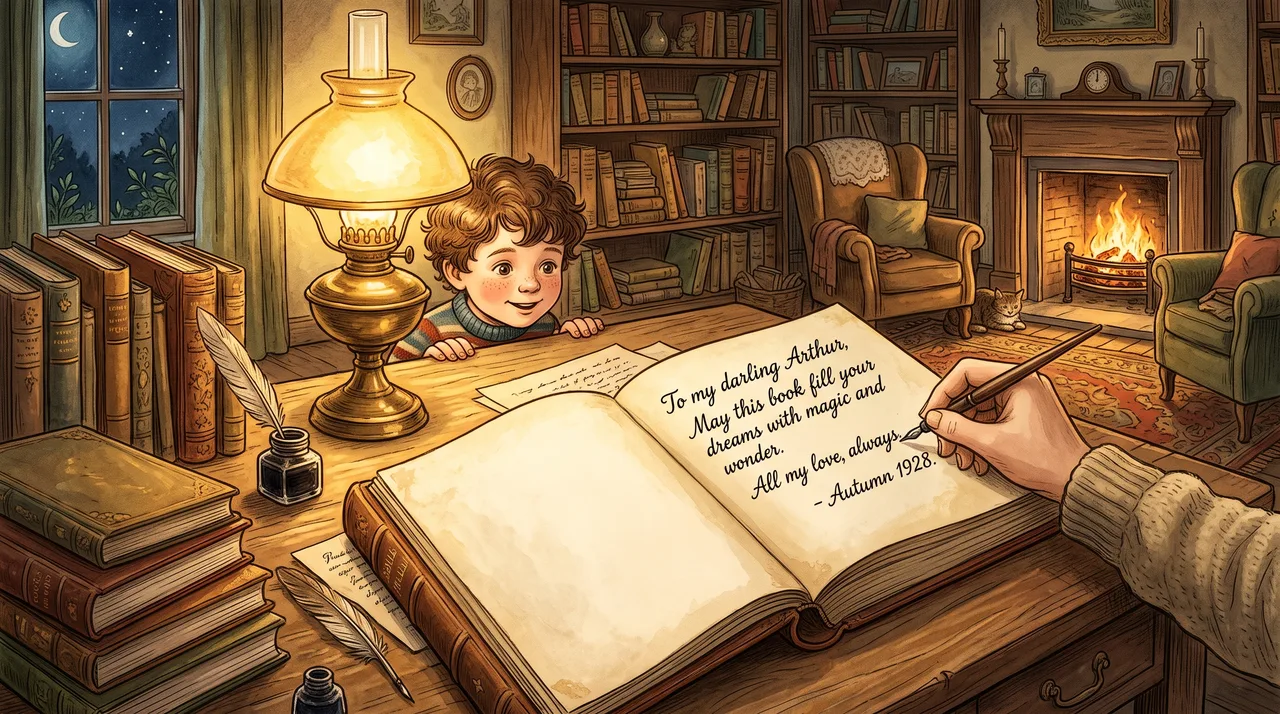
A book dedication is a short personal message on the endpaper or title page — usually two to five sentences. A good dedication answers three questions: who the book belongs to, what the occasion is, and why it comes from you in particular. Write it by hand, add the date and your signature — that is what turns one copy among thousands into the copy nobody lends out or gives away.
What a dedication should include — and what to leave out
A reliable structure has five parts: greeting, occasion, personal reason, wish, and signature with the date. The greeting names the person and ends with a comma ("Dear Annie,"). The occasion anchors the message in time — "for your sixth birthday", "for your first school report". The personal reason is the heart of it: one sentence about why you chose this book for this person. The wish looks ahead, and the signature and date turn a note into a record — in twenty years, that is the part that will matter most.
Leave out anything that would fit any other book or any other person. "Hope you enjoy the book" isn't a dedication, it's just an extra signature. Skip apologies too ("hope I got your taste right") and long speeches — a dedication is a few lines meant to be read aloud.
Dedications have a long history: authors printed a dedication to a patron or loved one on its own page in some of the earliest printed books. A handwritten dedication from the giver is the reader's version of the same tradition — it gives the book a second author.
How to write a dedication, step by step
- 1Settle on one ideaWhat should the reader feel when they open the book again in ten years? Gratitude, encouragement, a memory of a year together? One idea is enough — a dedication with three ideas falls apart.
- 2Start with a greeting"Dear Annie," — with a comma after the name and the name capitalised. Use the form of the name the child actually hears every day, whether that's a nickname or the full name, and double-check the spelling.
- 3Write a specific reasonOne sentence on why this book and why now: a memory ("like that summer at the seaside…"), a quality ("because you never give up") or a moment (starting school). No template can write this part for you.
- 4End with a wishA short wish for the future tied to the book or to reading: "May your stories last longer than your toys." Avoid phrases that have nothing to do with the book or the occasion.
- 5Sign it and add the dateA signature and date turn the message into a keepsake — without them, in a few years nobody will know who the book was from or why. Month and year are enough.
- 6Draft it firstWrite the dedication on scrap paper, read it aloud, and only then copy it into the book. Test your pen on the bottom margin of the last page first — you can't erase or rewrite inside a book.
Book dedications for children
Treat the examples below as a skeleton — swap in the name, the occasion and one specific detail, and the dedication becomes yours. Read the dedication aloud every time you open the book together: reading campaigns such as the Summer Reading Challenge and Read Across America exist precisely because regular reading aloud matters, and a dedication makes a lovely first page for that ritual.
Book dedications for adults
For adults, a dedication can carry more humour and less explanation — the reader knows the context. One specific reference and a short wish work best.
Where to write a dedication and with what
The usual place is the front endpaper (the first leaf right after the cover) or the half-title page — the page with just the book's title. Don't write over printed text or on the inside of the cover; a dedication deserves its own quiet space. In books for the youngest, use the top of the page — the bottom edges are the first thing small hands grab.
The most reliable choice is an ordinary ballpoint pen: it doesn't smudge or bleed through to the other side. Gel and fountain pens look more festive but dry slowly on smooth coated paper — test them on the margin of the last page and let the dedication dry for a few minutes before closing the book. Markers and felt-tips don't belong in books.
If you'd rather not write in the book, perhaps because it's a collector's copy, tuck the dedication in on a separate card, or stick an ex libris bookplate on the endpaper and write your message on that. And if you're still choosing the book, see our guide to choosing children's books by age.
The most common mistakes that spoil a dedication
- A generic phrase"Hope you enjoy the book" fits every book and every person — so it says nothing. Add a name, the occasion and one specific detail.
- A quote with nothing of your ownA copied quote is a start, not a whole dedication. Add a sentence about why you chose this one, and credit its author.
- No date or signatureWithout them, in ten years nobody will know who the book was from or why. The date is what makes a dedication a keepsake.
- Slips in the greetingThe most common ones are a missing comma after the name ("Dear Annie,") and a misspelt or uncapitalised name. Pick one form of the name and keep it the same throughout the message.
- The wrong penA smudged or bled-through dedication can't be fixed. Always test the pen elsewhere first and let the ink dry before closing the book.
A dedication printed in the book
A handwritten dedication has a printed counterpart: with personalised books, the dedication is entered in advance and printed on the opening page as part of the book. That's handy when you're sending the gift from afar, when your message is longer than an endpaper can hold, or when the book should feel personal from the very first page.
At Hero of the Book, you write the dedication directly in the guided builder while creating the story, and it's printed on the opening page — the name and dedication read naturally because the story is written in your language from the start (before you pay, you'll see a suggested title, a story preview and the dedication; the finished illustrations come after you order). Printed and handwritten dedications go together — you can still add a few words by hand on the endpaper of the printed book.
For the youngest children, where a book competes with toys, try our gift guide for one-year-olds — and for reading the dedicated copy at night, a bedtime story ritual helps.
Sources
- Dedication — Wikipedia — The history and forms of dedicating a work.
- Merriam-Webster — Checking spelling, capitalisation and punctuation.
- Summer Reading Challenge (The Reading Agency) — A campaign encouraging children to keep reading.