
Read-Aloud Stories on YouTube: When Video Is Enough
8/21/2026
A YouTube read-aloud story can rescue a sick afternoon, but at night it ruins sleep. When to press play — and how to switch to your voice or a book.
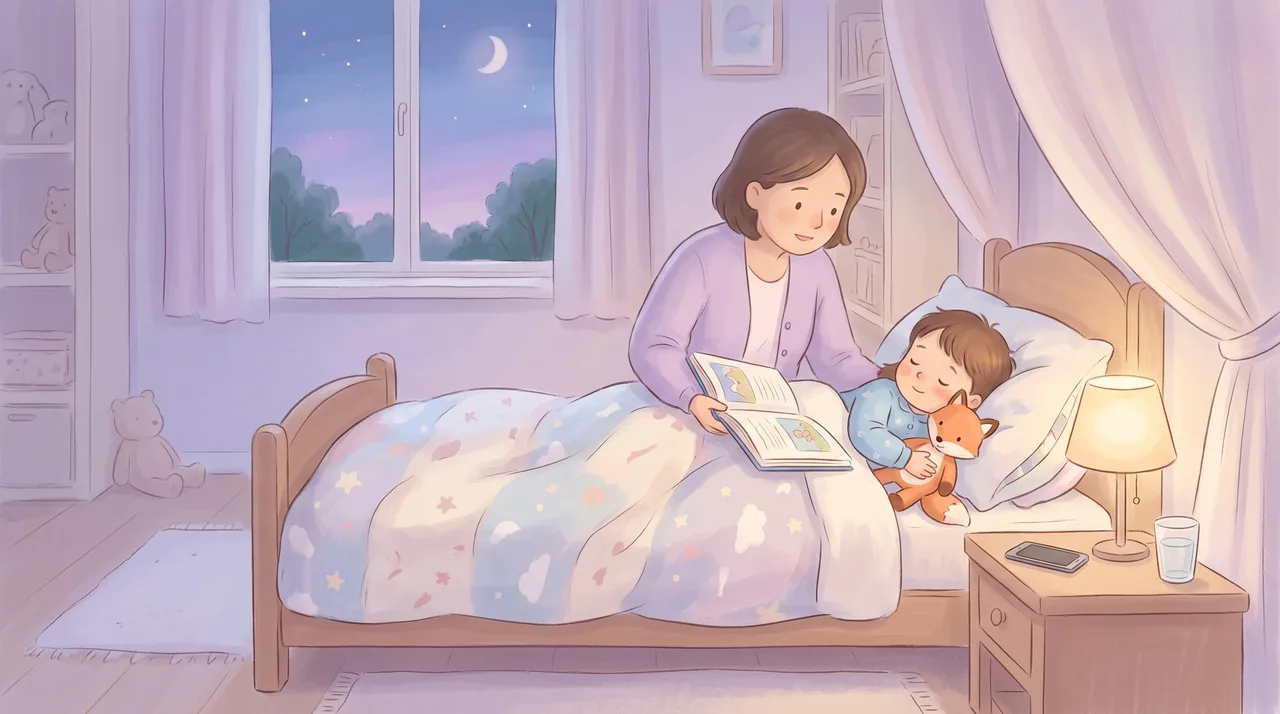
Read-aloud stories on YouTube — videos in which a narrator reads a story over the illustrations — are fine during the day: when your child is ill, on a journey, or when you need half an hour of peace. They are a poor fit for bedtime, though: screen light in the evening pushes sleep back, and autoplay rolling into the next video breaks a routine that needs a clear ending. In the evening, play just the audio or pick up a book — and move the video to the afternoon.
What a child really gets from a read-aloud video
Among videos for children, a read-aloud story is one of the better things you will find on YouTube: your child hears a continuous narrative, full sentences and words that rarely come up in everyday conversation — and the pace of speech is slower than in fast-cut cartoons. As background sound while building or drawing, it works much like a story on the radio.
Compared with reading in person, though, the video is missing the other half: it does not ask, does not wait and never turns back a page. The illustrations also arrive ready-made on the screen, so imagination does less work than when a child builds the pictures from a voice. And for the youngest the difference is fundamental — according to the American Academy of Pediatrics, children under two learn almost nothing from a screen on their own; they learn from interacting with a real person. Watching a read-aloud story together and talking about it is therefore something entirely different from leaving a child alone with a tablet.
When a YouTube read-aloud video is enough
Video is not the enemy — it simply belongs to a different part of the day than bedtime. Typical situations where a read-aloud story is a good choice:
- Illness and long afternoons at homeA child with a fever cannot stay focused on play, and no parent can read for three hours straight. On a day like that, a calm, slow-paced read-aloud video is a better choice than fast animated series.
- Journeys and waitingTrains, waiting rooms, airports. In the car, consider audio only — the driver cannot see the screen anyway, and staring at a display does not help a child who gets travel sick.
- Half an hour of peace for parentsWhen you need to cook or finish some work, a read-aloud video makes more sense than random autoplay. Choose the channel in advance and put on one specific story, not an endless playlist.
- Hearing a favourite story again and againChildren want the same story over and over, and that is fine — repetition builds vocabulary. A video your child already knows can be played as audio only next time.
When video is not enough: the conversation is missing
Reading together is not just about transferring a story into a child's head. What builds language most is so-called dialogic reading: the parent asks questions ("What do you think the wolf will do?"), points at the pictures, waits for an answer and builds on it. That is exactly the part a video cannot do — it carries on whether or not your child understood, and it never asks. That is why reading campaigns such as Read Across America are about reading books together, not about minutes of listening.
Then there is the simple limit on screen time: the World Health Organization recommends no screen time before the age of two and no more than one hour a day between two and four. A read-aloud story counts towards that just like any other video — "it's basically a book" changes nothing about screen time. We have put together what to read with your child instead in our article on children's books by age.
Why falling asleep in front of a screen breaks the bedtime routine
The first problem is light. The screen shines into a child's eyes at close range exactly when the body should start releasing melatonin — falling asleep gets delayed and sleep is lighter. That is why the American Academy of Pediatrics recommends no screens in the hour before bed and no screens in the child's bedroom.
The second problem is autoplay. The story ends and the player offers the next one on its own — the end of the evening turns into bargaining for "just one more". A bedtime routine works precisely because its order and its ending are the same every time: bath, pyjamas, story, lights out. A video with an endless queue of episodes is the exact opposite.
The third difference is subtle: with a video, a child keeps their eyes open and follows the picture; with a voice, they can close them. Falling asleep to listening is physically a different activity from watching — which is why a radio story or reading aloud works and a video does not. We describe how to build the whole bedtime routine step by step in our article on bedtime stories.
How to move the YouTube bedtime story back into the routine
The habit of falling asleep to a video cannot be broken overnight. These steps turn it into listening and books within a few weeks:
- 1Move the video to the afternoonDo not take the story away, just give it a different place in the day. "We watch read-aloud stories after lunch, in the evening we read" is a rule a child grasps faster than an outright ban.
- 2In the evening, play only the voiceA transition phase: put on a story your child already knows from the video, but turn the phone face down and dim the brightness. Bear in mind that without a paid subscription YouTube stops playback once the screen locks — it is simpler to go straight for an audiobook or a radio story.
- 3Turn off autoplayYou will find the autoplay switch right in the player; in the YouTube Kids app, set a timer. One story has to mean one ending — otherwise the algorithm decides when the evening ends, not you.
- 4The last step of the evening belongs to a book or a told storyLet the screen go dark at least an hour before bed. Fill the last quarter of an hour with a book, storytelling or listening with the display off — that is the part that teaches a child to fall asleep on their own.
Video, audio only or reading in person: what to choose when
| Read-aloud video (YouTube) | Audio only (audiobook, radio) | Reading in person | |
|---|---|---|---|
| Best for | Afternoons: illness, waiting, a quiet moment for parents | Car journeys, bedtime, favourite stories on repeat | Bedtime routine, new books, talking about the story |
| Falling asleep | Unsuitable — light and autoplay push sleep back | Suitable — eyes can close and the ending is fixed | Best — a parent close by and a firm end to the day |
| Child's involvement | Passive: the video sets the pace and the pictures | Listening, imagination builds the pictures | Active: questions, pointing, turning pages back |
| Watch out for | Autoplay, ads, fast cuts on some channels | Choose a recording with a calm narrating pace | Takes a parent's time and energy — but even a few minutes is enough |
Where to find read-aloud stories without a screen
The easiest replacement for the evening video is a story to listen to: CBeebies Radio on BBC Sounds, or Storynory (storynory.com) with its free read-aloud tales — no picture needed. Add audiobooks of classic fairy tales and your own family treasury: record a grandparent on your phone reading a favourite story — your child will recognise the voice and the recording will stay with you.
There is another way to make listening personal: a book from Hero of the Book in which your child is the hero can come with an audiobook — the whole story read by a professional narrator for $3.99, so the bedtime listening is about them. And if you would rather read yourself and want texts you can start with straight away, have a look at our article on stories for children to read.
Sources
- WHO: guidelines on physical activity, sedentary behaviour and sleep for children under 5 — No screen time before age 2, no more than one hour a day between ages 2 and 4.
- AAP: Media and Young Minds (Pediatrics, 2016) — The American Academy of Pediatrics recommendations on screens for young children — including no screens in the hour before bed or in the bedroom.
- BBC Sounds: CBeebies Radio — Stories and songs for young children to listen to, without a screen.