
First Holy Communion Messages from Parents and Godparents
10/5/2026
Ready-to-use First Communion messages from parents, godparents and grandparents – and how to tailor them to a child's age and reading level.
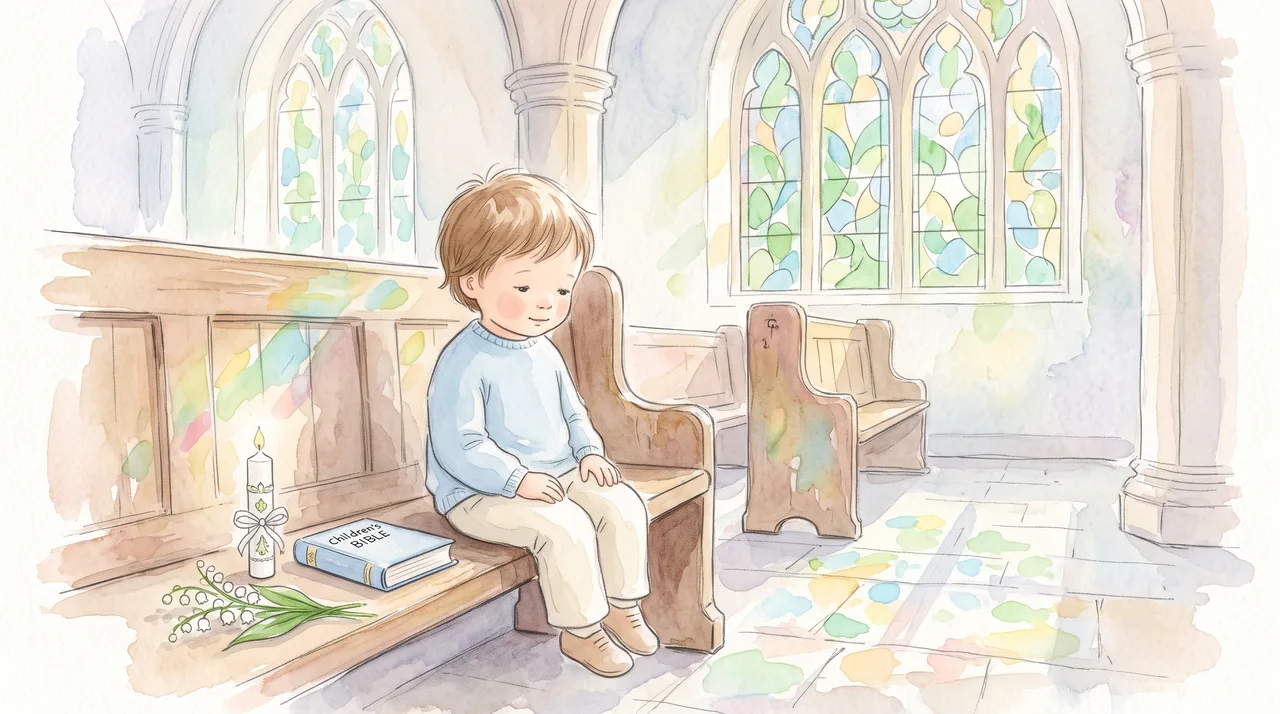
A good First Holy Communion message has three parts: the child's name, one sentence about what the day means (meeting Jesus, not just "your big day"), and a wish that reflects who is writing – a parent blesses, a godparent promises to walk alongside, a grandparent remembers. Let age guide the length and the words: an eight-year-old should be able to read it alone, so two short sentences; an older child can handle a Bible verse too.
Who writes what: parents, godparents and grandparents
The most common mistake is that everyone writes the same thing – "May God be with you" – and the child ends up with five identical cards. It helps if each person takes what belongs to their role.
Parents talk about the road they have travelled with the child: the christening, bedtime prayers, preparation at church or in RE lessons. Their message is the most personal and can easily be the longest.
A godfather or godmother promised at the christening to help the child grow in faith. First Communion is the first big moment to recall that promise – and renew it: "I'm still here."
Grandparents are the only ones who can compare across time. They might describe their own First Communion, or carrying the child to be christened. Twenty years on, a line like that is what the child will most love rereading.
Brothers, sisters and friends need just one sentence – ideally in their own handwriting, spelling mistakes and all.
Messages from parents
Messages from godparents
Messages from grandparents
How to adapt the message to the child's age
| Age | What the child can manage | How to write |
|---|---|---|
| 7–8 | Reads alone, but slowly; joined-up handwriting is hard work | Two or three short sentences, printed or written neatly. Name, one wish, signature. No quotations. |
| 9–10 | Reads fluently and understands images like "bread of life" | You can add a short Bible verse and a line about what the day means. Five sentences is still enough. |
| 11 and up | Can tell a stock phrase from something personal | Fewer pious phrases, more of you: what you admire in the child, what you wish them for the years when their faith may be tested. |
| Teenager or adult | Chose to receive Communion on their own | Honour that choice. Write as you would to an adult: "I respect that you made this decision yourself." |
Verses and short quotes that work well
- "I am the bread of life." (John 6:35)The most popular choice – it ties directly to the Eucharist and is short enough to fit on a holy card or in a book.
- "Let the little children come to me." (Matthew 19:14)Suits the youngest children and messages from grandparents.
- "The Lord bless you and keep you." (Numbers 6:24)The Aaronic blessing; good when you'd rather use a short formula than a wish of your own.
- "I am with you always." (Matthew 28:20)For godparents who want to remind the child they are never alone on their journey of faith.
Empty phrases and what to say instead
- "Have a wonderful big day"You could say that for a birthday or a school report. Make it specific: "Today you receive Jesus for the first time."
- "May God be with you" on its ownBy itself it's a formula the child will get from everyone. Add something of your own: "…and I'll be there whenever you need me."
- Long sermons about faithAn eight-year-old doesn't want to read a paragraph on the meaning of the sacraments. One sentence they understand beats ten they skip.
- No signature or date"From us" will mean nothing in twenty years. Write your full name or role (Godfather Peter) and the date.
How to write your own message in five minutes
- 1Use the child's nameNot "Dear child", but what you call them at home – "Dear Annie", "Hi, Jake".
- 2Write one sentence about what is happening todayBe specific: "today you receive Jesus for the first time" says more than "your big day".
- 3Add something only your role can sayA parent recalls the christening, a godparent the promise, a grandparent their own First Communion.
- 4End with a wish for the futureOne wish is enough. Five in a row blur into one.
- 5Sign it and add the dateIn twenty years, the date and the name of the church are what the child will look for. Almost everyone forgets this.
Where to write it so it isn't lost
After the celebration, cards often vanish into a box with the wrapping paper. A message meant to last belongs somewhere the child will come back to: the flyleaf of a children's Bible or prayer book, the back of a holy card from the parish, or the photo album from the day. For more on writing a dedication directly into a book, see Book dedications: what to write, messages to copy and common mistakes.
If you're giving a personalised book in which the child is the hero of the story, the opening dedication is written while you put the book together – any of the messages above can go in unchanged. The e-book is usually ready within 15 minutes, so it works even at the last minute, while the printed copy arrives in roughly 7 working days – so plan ahead for that one. Gift ideas and traditions around the whole day are covered in First Holy Communion: gifts, messages and dedications; what to do with the christening candle and gown, which sometimes come out again for Communion, is explained in The christening candle and gown after the ceremony.
Sources
- The Bible – a standard English translation — Wording of the verses quoted.
- Catechism of the Catholic Church (vatican.va) — The section on the Eucharist and First Communion.
- Code of Canon Law (vatican.va) — Canons on preparing children for First Communion.