
Books for First Graders: Match How School Teaches Reading
10/13/2026 · The Hero of the Book Team
Phonics, leveled readers or sight words? How your first grader learns to read shows which first book they can manage alone and when it's time for it.
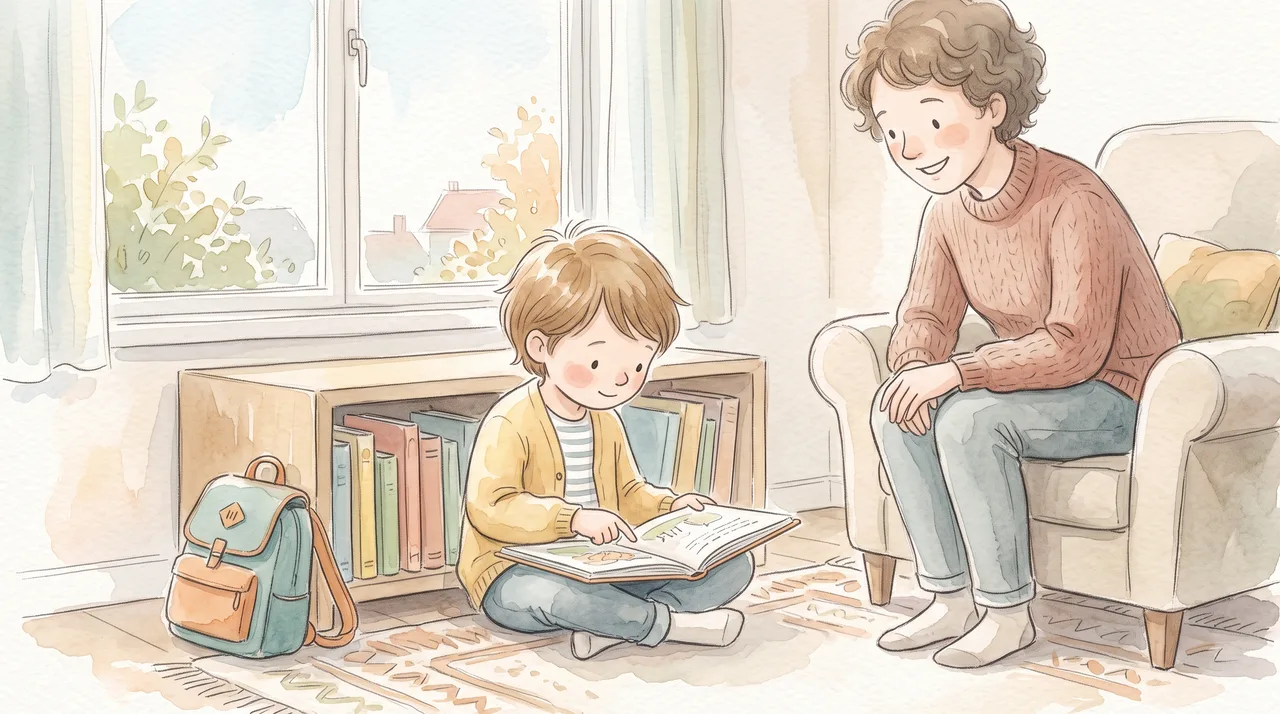
Choose books for first graders based on how your child is learning to read at school. With a phonics program, look for decodable books: short words that use only the letter sounds the class has already covered. With leveled readers, pick books at your child's current level, and if the class is building a sight-word list, short lines your child can read smoothly matter most. Keep reading longer stories aloud for now.
First, find out how the class is reading
In American schools, most classes teach reading through phonics: kids learn letter sounds in a set order and blend them into words. Many classrooms also use leveled readers, where books are sorted by difficulty, and nearly all of them work on sight words — common words kids learn to recognize at a glance. The mix is chosen by the school, and even two classrooms in the same building can differ. So it's not enough to know what an older sibling used.
The quickest clue is in the backpack: take-home books and reading folders usually show the program name or the book's level. The second thing you need to know is which sounds have been taught so far. A book packed with sounds your child hasn't learned yet mostly teaches them that they can't read. You can find out both with one question to the teacher — wording you can copy is a little further down.
If you're choosing a book before the school year starts and don't know the approach yet, go for a story to read aloud. More ideas for the start of school are in our article Gifts for first graders.
Three ways schools teach reading, and what they mean for a book
| Phonics (decodable books) | Leveled readers | Sight words | |
|---|---|---|---|
| How your child reads | Sounds out each letter and blends: c-a-t, cat | Uses sounds, pictures and repeated patterns to work through a short text | Recognizes common words at a glance: the, and, said |
| Letters at the start | Taught in a set order, a few sounds at a time over the year | Books are sorted by level, usually marked with a letter or number | A short word list that grows week by week — ask for the class list |
| First book to read alone | Decodable books using only the sounds already taught | Books at your child's current level, short repeated sentences | Short lines, large print, plenty of space between words |
| What to avoid for now | Long words and spellings the class hasn't covered | Jumping up levels too fast | Pushing for reading speed |
Phonics: picture reading in the fall, first decodable books by midyear
With phonics, letter sounds are added gradually over the year and your child blends them into words. In September and October they can only handle texts built from a handful of sounds — it's early for a book of their own, and school reading keeps them busy enough.
In the fall, rebus books work well: some words are replaced by small pictures your child "reads" alone, and you read the short words in between, or they give it a try. Around midyear, when the class knows most letter sounds, it's time for the first short decodable books. Series like Bob Books are built exactly this way, and leveled series such as Step into Reading or I Can Read! mark the difficulty on the cover. Start with the lowest level or the shortest title, even if it seems babyish to you. Move up once your child finishes a book without much stumbling, usually in the spring. The feeling of reading a whole book alone matters more right now than an exciting plot.
Watch out for long words and tricky spellings. Words like "through" or "knight" are harder for a first grader in November than a whole sentence like "Sam sat on a mat." If a page has several of them, set the book aside for a few months.
Leveled readers: match the level, not the cover
Leveled readers are sorted by difficulty, and the school assesses which level your child is reading at. Kids move up step by step, so a child at the right level can often read a short book on any topic sooner than you'd expect — as long as it's really at their level.
That gives you one strict rule: judge the inside, not the cover. A book labeled "for beginning readers" can still have long sentences and hard words that make it unreadable for your child in the fall. Check a sample page instead. Ask the teacher which level your child is on and start with the shortest book at that level. Bring home the next level only once the current one feels easy.
One common trap: your child may read aloud slowly and use pictures or patterns to figure out words. Don't switch them to a different strategy you remember from your own school days — they'd be getting two conflicting sets of instructions.
Sight words: short lines and smooth reading, no rush
Many classes send home a list of sight words — short, common words like "the," "was" or "said" that kids learn to recognize instantly, because many of them can't be sounded out. At first your child may read deliberately slowly, word by word. That's not a mistake you need to "speed up" at home.
For a first book, that means short lines, large print and plenty of space between words, so the eye doesn't have to hunt for where to go next. It's worth asking which words the class is working on and how long the texts they read are, then choosing a book to match. Books with lots of repeated words and short dialogue, like Elephant & Piggie by Mo Willems, work well once your child reads whole short sentences at school. The teacher can recommend specific titles. After reading, ask your child what the story was about — understanding matters just as much as getting the words right.
What to ask the teacher: wording you can copy
How to test a book at the bookstore or library
- 1Open to a page in the middleThe first page is usually the easiest. Check whether the text uses print and words your child knows from school.
- 2Count the unfamiliar soundsWith phonics, look for sounds and spellings the class hasn't covered yet. If you find more than two or three on a page, save the book for later.
- 3Run a finger along a lineAt first, lines with just a few words are easiest to read. A long line across the whole page means your child loses their place and starts guessing.
- 4Let your child read the first sentenceIf they stumble more than once or twice, the book is still too hard. Don't treat it as a failure, just as a clue for when to come back to it.
- 5Check how much text is on each spreadShort text and a big picture isn't a skimpy book — it's a book a first grader can finish. And a finished book is what matters most in first grade.
Books your first grader doesn't read alone, but needs
Reading alone in first grade is slow, hard work. If your child only had books they could read themselves, they'd get stories at the level of a beginning reader. So next to their own shelf they need a second one — the one you read from.
- Reading aloud every dayA longer chapter story where your child can't wait to find out how it ends. The desire to learn to read grows from stories worth reading. Tips by age are in our article Children's books: how to choose by age, interests and attention span.
- Taking turnsYou read the long sentences, your child reads short words or one sentence per page. It works with any book — just point to the word that's theirs.
- A book where they're the main characterTheir own name is often the first word a child recognizes as a whole. In a personalized book the name appears throughout the story, so your child looks for it and reads it alone. The print isn't tailored to any school reading program, though, so it's a book to read together, not a first reader. The digital version is usually ready within 15 minutes and has 12 illustrated spreads; how it's made is described in our article Personalized book.
- Listening with the text in front of themPlay an audiobook or read aloud while your child follows the text with a finger. They look for words they already know and try to recognize them — without the pressure of having to read alone.
Sources
- Reading Rockets — A national US resource for parents and teachers on how children learn to read.
- Phonics – Wikipedia — What phonics is and how it's used to teach beginning reading.
- Read Across America (National Education Association) — A nationwide campaign that encourages reading with children.