
Baptism Candle and Gown: What to Do After the Ceremony
9/29/2026
What to do with the baptism candle and gown once the ceremony is over: when to light the candle again, how to wash the gown, and how to pack both safely.
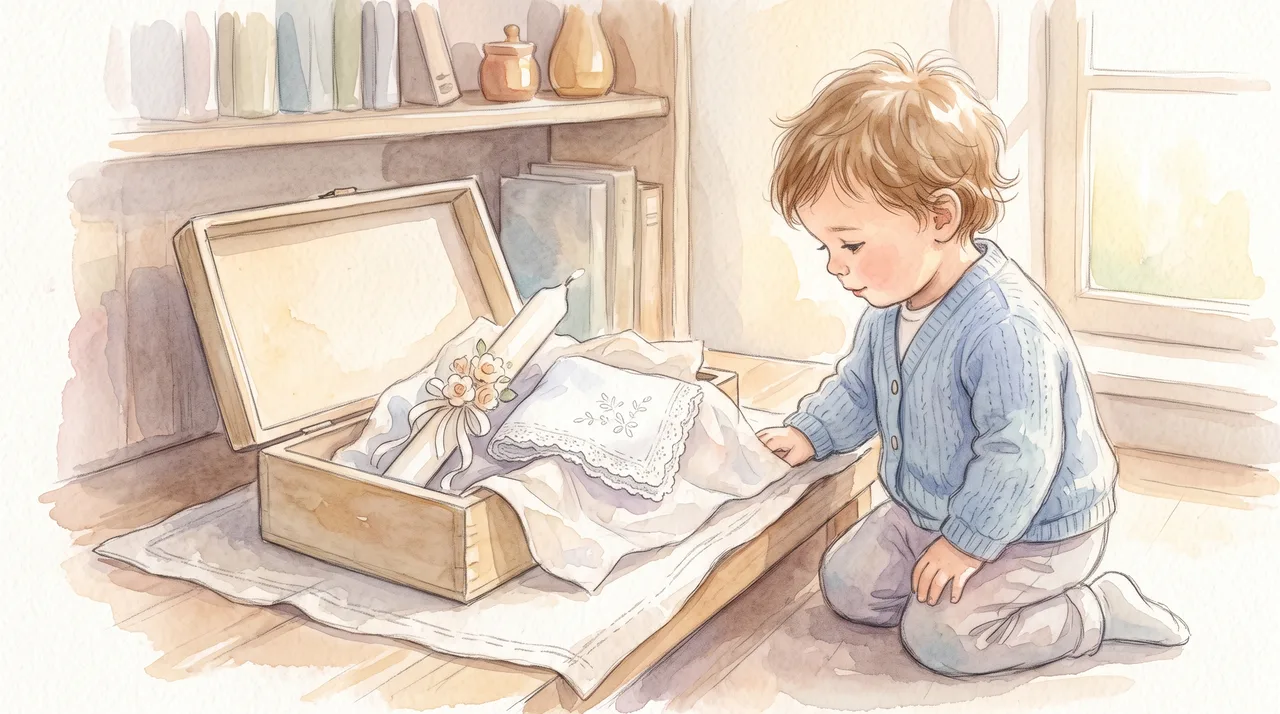
You take the baptism candle and the white garment (in many American parishes, a christening gown or a small white bib) home after the ceremony — they belong to your child unless the parish only lent them. The candle is saved for baptism anniversaries and First Communion, the gown for a younger sibling's christening or as a keepsake. To last for decades and survive a move, the candle mainly needs a cool spot and a sturdy case; the fabric needs the oil washed out, acid-free tissue paper, and no plastic bags.
Why the candle and gown are kept after baptism
Both are part of the rite, not decorations. The white garment means the newly baptized person has "put on Christ," and the candle lit from the Easter (paschal) candle means Christ has enlightened them — that is how the Catechism of the Catholic Church explains it in paragraph 1243. Parents and godparents receive the light with the task of keeping it burning until the child can do so on their own, which is why the candle comes back whenever the child renews their baptismal promises.
There is a practical side to this, too: blessed objects don't go in the trash. If the candle or the gown is ever truly ruined, the traditional way is to burn or bury them, or to bring them to the parish. Until then, it's best to treat them like a family document — they need a set place, a label, and someone who knows where they are.
Christening gown, white garment, or bib: what do you have?
"Baptismal garment" can mean three different things in practice. In many families it is a full christening gown — often an heirloom passed down through generations. Elsewhere the priest or a godparent places a simple white garment or bib on the baby during the rite, and some parishes use just a small white stole or collar. They all carry the same meaning and need the same care.
Before you leave the church, ask the priest or the parish office whether the garment is yours to keep. Some parishes lend garments and candles and expect them back — and that's hard to sort out later. If it is yours, you can pass it on to a younger sibling or to cousins. Families who do this embroider the initials and year of each child baptized in it into the inside hem with fine thread; thirty years on, that becomes the most precious part of the whole piece.
When to light the baptism candle again
The candle isn't for dinner parties; it's for moments that connect back to the baptism. It only burns briefly each time so it lasts into adulthood.
- Baptism anniversaryMany families light it for a few minutes at the table or during bedtime prayers and tell the child who was at the baptism and what happened that day. For little kids this works even better than a birthday party — it's short and gives them a clear picture.
- First CommunionMany parishes ask children to bring their baptism candle — they renew their baptismal promises during the celebration. It's worth checking the candle a few weeks ahead, not on the morning of the big day. For gift and inscription ideas, see our article First Communion: gifts, messages, and dedications.
- Confirmation and weddingSome people bring it to their Confirmation or even their wedding. By then it's the teen's or adult's own choice — and there has to be enough candle left for it.
- How to burn it so it lastsSet it on a small plate, because the decorations drip colored wax. Let it burn only a few minutes, then trim the wick, and never let it burn down below the decoration with the name and date.
Candle and gown: what damages them and how to store them
Each one has a different enemy. The candle fears heat; the fabric fears light, damp, and sharp creases.
| Baptism candle | Christening gown or garment | |
|---|---|---|
| Biggest enemy | heat — the wax softens and the candle bends long before it starts to melt | oil and milk stains that turn yellow over the years |
| Light | colored decorations and printing fade | white fabric yellows and fibers weaken, especially silk |
| Packaging | a sturdy tube or box with acid-free paper inside | a cotton pillowcase or box, layered with acid-free tissue paper |
| Avoid | plastic wrap directly on the decorations — wax ornaments stick to it | plastic bags, fabric softener, starch, and pins |
| Where at home | a closet in a living area, lying flat or upright in its case | a closet in a living area, never the attic or basement |
| How often to check | every few years; a white bloom on beeswax is normal and buffs off with a dry cloth | once a year, take it out and refold it differently so the fabric doesn't crack along the same crease |
Right after the ceremony: five things before it all goes in a box
- 1Find out what's yoursThe garment and candle may belong to the parish. Return what needs returning right away; take home what's yours.
- 2Wash the garment within a weekThe fabric often gets chrism on it — the oil the priest uses to anoint the top of the baby's head — plus milk or drool. On fresh fabric it washes out easily; in ten years it turns into a yellow stain. Use lukewarm water and a mild detergent, no bleach or fabric softener, dry it flat, and let it dry completely.
- 3Let the candle cool and clean itTrim the wick, wipe the soot around it with a dry paper napkin, and wrap it only the next day, when the wax is fully hard.
- 4Write a noteDate, church, who baptized, who the godparents were, who decorated the candle. In twenty years nobody will remember. There's a template below.
- 5Photograph bothThe candle and the garment separately, on a plain background. If something gets lost in a move, at least the picture remains — and the photo works in an album or a first-year photo book, too.
How to pack the candle and gown for a move
Most baptism candles don't die in a closet box — they die during a move: in a hot moving truck, under a pile of books, or in a box nobody unpacks for years.
- 1Candle in a sturdy caseWrap it in acid-free paper, then in bubble wrap, and put it in a poster tube or a wine bottle box. Fill the gaps so it can't shift — the candles that break are the ones that can hit the side.
- 2Roll the gown, don't fold itRoll it around a paper tube or put tissue paper in every fold, and slip it into a cotton pillowcase.
- 3Both in one small boxLabel it clearly: "baptism keepsakes — no heat, moving with us." A small box won't get lost among a hundred identical ones.
- 4Take it with you, not in the truckIn summer, the cargo area of a moving truck or a car parked in the sun gets hot enough to bend the candle. Keep the box in the cab or in the car you're riding in.
- 5Unpack it within a weekA new home is often damp for the first few weeks, and boxes sit on the floor. Check the candle and the garment, let the fabric air out, and put both straight into their new spot.
One box for all the keepsakes from the early years
The candle and gown mostly get lost when every item lives somewhere else. What works is one sturdy box in the living area of your home, holding a copy of the baptismal certificate too (the original belongs with your important documents, and if it's lost, the parish can issue a new one from its baptismal register), photos from the christening, and gifts from the godparents — for what people usually give, see Baptism gifts: who gives what and how to avoid duplicates — and maybe even a baby handprint and footprint.
Someday you'll hand the box to your child — when they move out, at their Confirmation, or at their wedding. Hand it over with a note and a few lines about that day. A candle without a story is just decorated wax; with a note, it's a piece of family history.
A note for the baptism keepsake box
Copy it and fill in the blanks. The first note is a factual record; the second is a short message your child will read when they receive the box.