
Visiting a Newborn: When to Go, How Long and What to Bring
10/8/2026 · The Hero of the Book Team
A visit after a birth should give a new mom a break, not more work. When to reach out, how long to stay, what to bring and how home visits work.
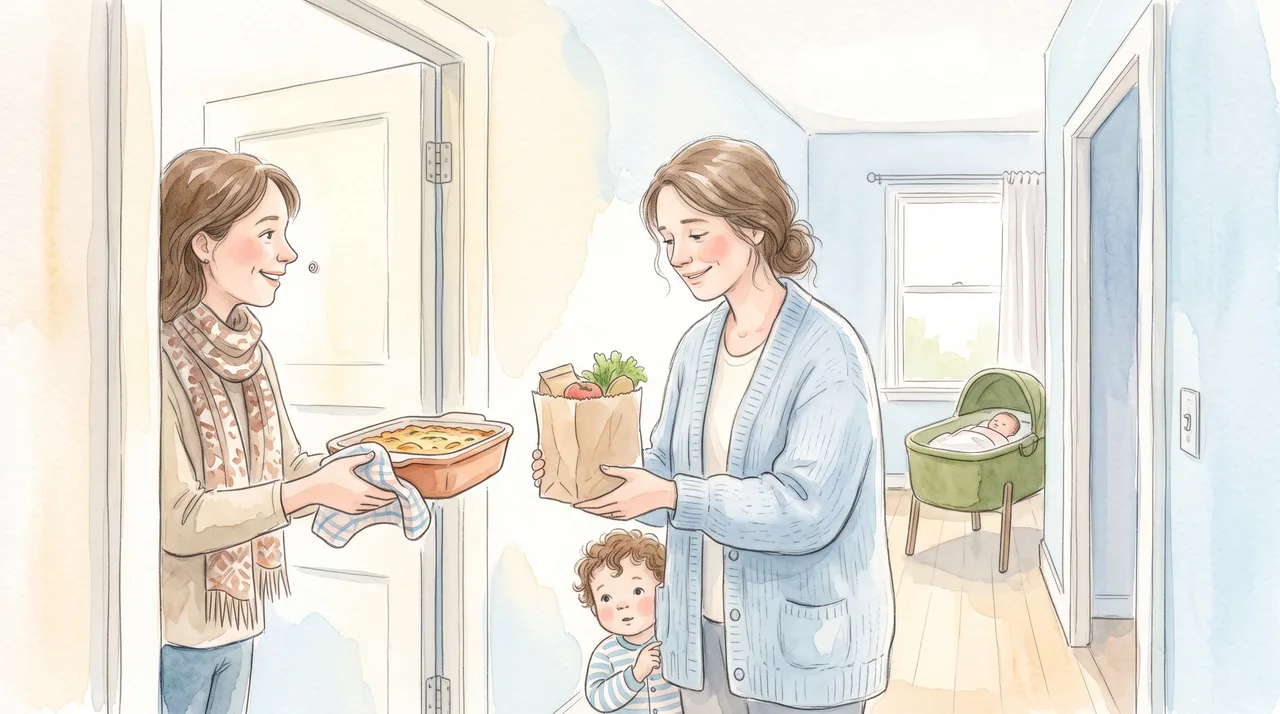
Visit a new family only once the parents invite you — for friends and extended family that usually means two to four weeks after the baby comes home, not the day they leave the hospital. Stay about an hour, bring food or offer a specific kind of help, and if you have a cold, don't come at all. Medical visits (the pediatrician, a nurse or midwife) are a different matter, and in the first days they come first.
When to visit after a baby is born
The first days at home are when the family is still learning to breastfeed or bottle-feed, sleep in shifts and heal after the birth. Medical checkups happen during this time, too: the baby's first pediatrician visit usually takes place within a few days of coming home from the hospital, and some families also see a nurse, midwife or lactation consultant.
A social visit doesn't belong in that stretch. A sensible order is: closest family first (grandparents, the parents' siblings), who usually come to help rather than to look; then friends; and finally coworkers and acquaintances. One rule always works: the parents pick the time, not you. Asking "when would work for you?" gets a more honest answer than "can I come tomorrow?", which is hard to say no to.
Be ready for a plan to fall through that morning. A night with a newborn can't be scheduled, so if the parents cancel, don't take it personally — just offer another day, no guilt trip.
Who, when and for how long
| Who | When to reach out | How long | What to bring |
|---|---|---|---|
| Grandparents and closest family | as agreed, even in the first week | as long as they're helping — cooking, cleaning, older siblings | food, groceries, watching an older child |
| Close friends | after the first week, once the parents text | 30–60 minutes | a ready-made meal, a little something for Mom |
| Coworkers and acquaintances | three to six weeks in, or later | under an hour | a small gift, ideally one from the whole group |
| Friends with young kids | after the first six weeks, unless the parents say otherwise | briefly | without the kids, or only with healthy ones |
A visit, step by step, that won't be a burden
- 1Text, don't callA text can be read at 3 a.m. during a feeding; a phone call wakes the baby. Offer two or three times and make it clear that "not now" is completely fine.
- 2Confirm the day beforeA quick "still good for tomorrow at ten?" gives the parents room to postpone without any awkwardness.
- 3Check your own healthA runny nose, cough, fever, stomach bug or a sick child at home means rescheduling. A newborn handles infections worse than an adult and hasn't had any vaccines yet.
- 4Arrive on time and smoke-freeMoms and babies are often sensitive to clothes that smell of smoke and to strong perfume. Take your shoes off and wash your hands as soon as you walk in, even if nobody asks.
- 5Don't pick up the baby uninvitedWait until the parents offer. Don't kiss the baby's face or hands, and don't wake a sleeping baby — a photo isn't worth it.
- 6Do one extra thingEmpty the dishwasher, hang the laundry, take out the trash, make tea. Don't ask "can I help with anything?" — say what you're going to do.
- 7Leave before they walk you outAn hour is plenty. When Mom starts drifting off to feed the baby or yawning, that's a signal, not a polite pause.
What to bring when visiting a newborn
- Ready-made meals in containers they don't have to returnSoup, chili, lasagna or a pasta bake for two days. Write on the lid what it is and how to reheat it. If Mom is breastfeeding and avoiding certain foods, ask ahead — there's no point guessing.
- Snacks you can eat with one handSliced fruit, nuts, cheese, homemade granola bars. The other hand is often busy feeding the baby.
- Groceries from their listAsk what they're running low on: bread, milk, diapers, maternity pads. It's the least romantic and most appreciated gift there is.
- A little something for the older siblingAn older child notices that everyone brings presents for the baby. A small gift just for them — a coloring book, a picture book, a toy car — shows nobody forgot about them.
- What to leave at homeCut flowers (the parents end up dealing with the vase, the water and the wilting leaves), big toys, newborn-size clothes the baby will outgrow in a few weeks, and anything heavily scented.
A gift that truly helps a new mom
The best gift after a birth is time and food — things come second. If you want to bring something tangible, think about Mom rather than the baby: after the first few weeks, parents usually have more baby gear than they can use. Ideas based on what's actually missing in those first weeks are in A gift for a new mom after birth, and if you're chipping in with coworkers, a gift basket for a new mom filled with everyday essentials works well.
If you'd also like to give something for the baby, it helps to figure out who a new-baby gift is really for. For an older sibling, a gift where they are the main character works well: a personalized book, for example, where they're the hero and the new baby brother or sister plays a supporting role — better saved for a later visit than the first week.
Home visits from a nurse or midwife after birth
Alongside social visits, there are medical ones. In some areas a nurse or midwife can visit at home after you leave the hospital and check during the first weeks how a tear or C-section incision is healing, how the uterus is recovering, how feeding is going, whether the baby is gaining weight, how the umbilical cord stump is healing and whether there are signs of jaundice.
These visits aren't required. Whether they're available depends on where you live and on your hospital, and it's best to ask about them during pregnancy. Whether insurance covers them, how many visits and what referral you need can vary — your provider or your insurance company will give you the most reliable answer. Midwives' professional organizations can help you find someone nearby.
What isn't optional is the baby's first checkup with a pediatrician. It usually takes place in the office within a few days of coming home, so it's a good idea to choose a pediatrician before the birth.